
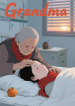
Chapter 1
Chapter 1
Do you know what it feels like to be diagnosed with a terminal illness at such a young age?
It’s something like this: a doctor, who had been acting a bit impatient, suddenly becomes incredibly gentle after looking at my test results. He asks me softly, “You’re a student here, right? Where are your parents? If they don’t live too far away, have them come to the hospital.”
I said, “My parents are both gone. I live with my Grandma.”
The doctor paused, startled. “Then please ask your Grandma to come. Whether we proceed with treatment and the specifics of how to treat it-these are things we need to discuss with a relative.”
I forced a smile, but as I did, I felt a sudden urge to cry. “It’s okay, you can tell me directly. I asked a senior who’s a medical student. I have a rough idea of what these lab reports mean.”
The doctor said nothing.
It was noisy outside the consultation room, but inside, it was deathly quiet.
In that rare silence, I felt like I was drowning.
I scrambled to pull a tissue out of my backpack, but I wasn’t fast enough; the tears had already started falling.
The doctor silently pushed a box of tissues toward me. I pulled one out and began to wipe my eyes.
The more I wiped, the more the tears came. They were endless.
I said, “My Grandma is old and illiterate. She’s never even left our small county. She doesn’t even know how to board a high-speed train. She has high blood pressure, and I’m afraid that if she finds out…”
I couldn’t finish the sentence.
The doctor was silent for a moment before saying, “The main issue is your condition. Much of the subsequent treatment requires a relative’s signature. Otherwise, we can’t treat you.”
I covered my face with tissues, one after another, and they were soon soaked through.
The doctor said softly, “Young lady, your illness hasn’t actually reached the terminal stage yet. Medically speaking, there’s still a very high chance of a cure. When fighting a disease, your state of mind is also very important.”
After leaving the hospital, I received a call from my counselor.
“Hello, Guan Qian? Your roommates said you were sent to the ER a few nights ago. What happened?”
“I might have cancer,” I said.
There was a dead silence on the other end for a full ten seconds before she offered some clumsy comfort. “Don’t worry, Guan Qian. Medical technology is so advanced now, and you’re so young. I’m sure it can be cured.”
I gave a soft “mm-hmm” in response.
She continued, “My husband’s uncle is a chief physician at the Affiliated Hospital. Send me the test results you have on hand, and I’ll ask him to take a look, okay?”
“Okay.”
The call ended.
I stood on the sidewalk as a misty veil of tears rose, blurring the numbers on the traffic light.
The light turned from red to green and back again. Pedestrians stopped and started, one group replacing another in a constant cycle.
A girl brushed past me, but then she turned back. She leaned over, patted my shoulder, and gently handed me a small pack of tissues and a tangerine.
“Don’t cry,” she whispered.
I looked up at her, her face a soft, glowing blur through my tears.
I’m sorry. I’m so sorry, I don’t have the strength to thank you today.
But I wish you well. I wish you eternal health, and that you never have to encounter the same pain and despair that I have.
The light turned green, and she walked away.
I stood up and wiped away my tears.
On that street corner where the cold wind blew in gusts, the tangerine in my palm felt warm.
The temperature in Hangzhou had already dropped, but a few scattered osmanthus trees still filled the air with a rich fragrance.
Amidst that cold scent of osmanthus, I was admitted to the hospital.
Only my counselor knew the true severity of my condition. My roommates and best friends all thought I was just going in for a minor surgery. They even joked with me, saying, “Oh no, Qianqian is going to miss the metalworking internship. She won’t get to be a hammer-grinding factory girl now!”
They burst into laughter, and I laughed along with them. But as I laughed, I turned away to hide my reddened eyes.
My cousin-aunt called that evening, just after I had finished the hospital admission procedures.
She spoke in a rush, telling me she had been getting ready to come to Hangzhou to sign my papers, but she’d let it slip while packing, and Grandma had found out.
“Your Grandma is so stubborn. She insisted on going to Hangzhou to take care of you. I really couldn’t stop her.”
I fell silent.
When my cousin-aunt didn’t hear a response for a long time, she sighed. “By all rights, I should have gone with her, but she refused to let me. She said the kids and the elderly at home need me to look after them… Qianqian, you don’t blame me, do you?”
Blame her for what?
She had both the young and the old to care for, and she had helped me plenty over the years. For a distant relative to do this much was already enough. How could I expect her to drop everything at home to take care of me?
I understood this, and Grandma understood it even better.
I managed a small smile. “Of course not, Auntie. I was already so grateful that you were willing to come sign for me. It’s fine, go ahead with your work. I’ll give Grandma a call.”
Her voice sounded tinged with guilt. “I didn’t really help with much… Right, Qianqian, do you have enough money for the treatment? Let me transfer some to you.”
I hurried to refuse. “No need, Auntie. I opened a photography studio, I have money on hand.”
She laughed, sounding relieved. “If you run short, you must tell me. Don’t keep it bottled up inside, okay?”
Even though she couldn’t see me, I nodded instinctively. “Thank you, Auntie… Please keep my illness a secret for me. I don’t want Grandma to become an object of pity for the whole neighborhood again.”
The year my parents had their accident, I was still small and didn’t remember much.
My only memory was of a house and courtyard filled with white, where Grandma cried so bitterly while the villagers held her, their eyes full of nothing but pity.
For someone who had been strong-willed her entire life, such suffocating sympathy can sometimes make a person want to run away.
After hanging up with my cousin-aunt, I called Grandma.
The gaudy ringback tone played for only a few seconds before the call was picked up.
“Hello? Qianqian?”
I couldn’t help it; the moment I heard her voice, I started to cry.
I was so pathetic.
I paused for a few seconds, struggling to keep any trace of a sob out of my voice before I spoke. “Yeah, it’s me. Have you had dinner?”
From the other end of the line, I could faintly hear the sound of a train announcement: “The train is arriving at the next station, Hangzhou Station. Passengers departing here, please prepare to disembark.”
Amidst the announcement, Grandma answered me clearly, “I’ve eaten. I made radish soup today. It was quite tasty.”
Liar.
I said, “Don’t lie to me. You’re in Hangzhou, aren’t you?”
She sighed. “I am.”
I asked, “How did you manage to get on the train? You can’t even read.”
Grandma chuckled. “I can’t read, but I can ask. The ticket sellers, the people sitting next to me-as soon as they saw I was an old lady from the countryside and realized I didn’t have much schooling, they were very patient with me. The young man next to me looked about your age; he even shared a cup of instant noodles with me.”
I covered my eyes with my hand, unable to speak.
She was quiet for a moment, then said, “Qianqian, why didn’t you tell Grandma you were sick? Do you know, I was thinking the whole way here… our Qianqian is all alone in Hangzhou. She’s always been a picky eater and she’s afraid of pain. Now that she’s sick, is there anyone to look after her? Is she crying all by herself?”
The world seemed to go silent for a second.
I scrambled to press the mute button so she wouldn’t hear the sobs I could no longer suppress.
In a corner of the deserted corridor, as the last rays of the sunset faded away, I couldn’t even keep myself standing. I leaned against the window frame and wept uncontrollably.